

Energia Power


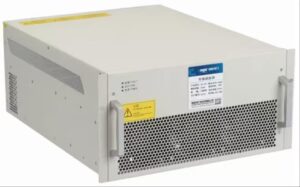
Active Harmonic Filter / Active Power Filter

JN-APF SERIES AHF

Parameter Specification
Electrical specification Capacity (by model) 30A / 50A / 75A / 100A / 150A / 200A
Input line voltage (L-L) 400V ±15%
Compensating current (per phase) 30A~200A (depending on the model)
Compensating harmonic order 2 ~ 50 times (configurable)
Full response time ≤5ms
Efficiency ≥97.5%
Communication interface Dry contact EPO / DI / DO
Communication protocol RS-485 / Modbus-RTU
Environmental requirement Operating temperature -45°C to 55°C
Structure Module weight 18.5kg ~ 68.5kg
Cooling mode Intelligent air cooling

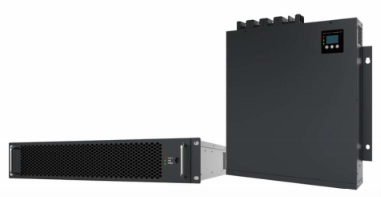
SiC Active Harmonic Filter / Active Power Filter

The Silicon Carbide (SiC) MOSFET Active Harmonic Filter (AHF) is a next-generation power quality solution designed to eliminate harmonic distortion, improve electrical system stability, and enhance overall energy efficiency in modern industrial and commercial power distribution systems. By utilizing advanced Silicon Carbide (SiC) MOSFET semiconductor technology, the filter delivers faster response times, higher efficiency, and greater reliability than conventional Active Harmonic Filters, making it ideal for applications with rapidly changing and nonlinear loads.

AHF Electrical Specifications
Rated Voltage 400V
Input Voltage Range -40% ~ +20%
Single Module Capacity 50A, 75A, 100A, 150A
Frequency 50/60Hz (-10% ~ +10%)
Filtering Range 2nd to 50th order selectable, single-order selectable
Harmonic Filtering Capability Exceeds 98% at rated load
CT Installation Method Open-loop or Closed-loop (Open-loop recommended for parallel operation)
Response Time ≤2ms
Wiring System Three-phase three-wire / Three-phase four-wire
Overload Capacity Continuous operation at 110% rated current; 1-minute operation at 120% rated current
Circuit Topology Three-level topology
Switching Frequency 20kHz
Parallel Operation Quantity ≤20 modules in parallel
Redundancy Any unit can operate independently.
Efficiency ≥99%
Power Factor Control Full compensation for inductive or capacitive currents (0–100%)
Compensation Effect 100% compensation for unbalanced capacitance and reactive power, with continuously adjustable compensation between capacitive and inductive modes.